Halloween Broomstick: A Playful Display Font for Crafters
As a maker who designs printable invitations, hand-stamped tags, and seasonal SVG bundles for Etsy, I’m always hunting for display fonts that do more than just look cute—they need to work. Halloween Broomstick is one of those rare typefaces that balances whimsy with real-world usability. It’s not just a spooky novelty; it’s a thoughtful, commercially viable display font built for crafters who sell physical products and digital downloads alike.
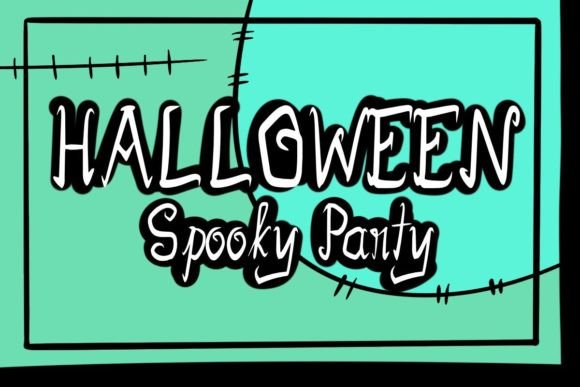
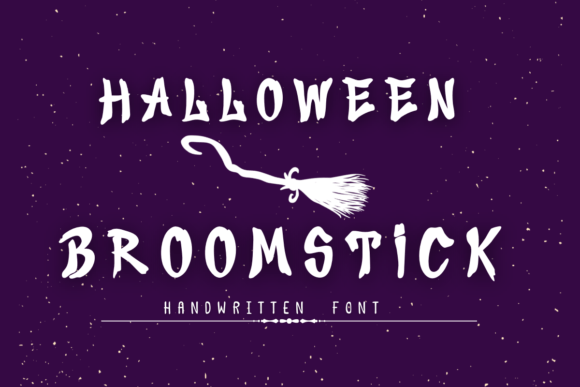
Halloween Broomstick has that unmistakable handmade charm—slightly uneven strokes, playful curves, and letters that lean like they’ve just landed mid-broomstick ride. The “g” curls like smoke, the “y” dips with theatrical flair, and the uppercase “H” feels like it belongs on a vintage apothecary label. Yet it’s never so busy that it sacrifices legibility at small sizes. That balance is why it shines on candle jars, boutique gift tags, and farmhouse-style wall signs—even when scaled down to 12pt on a 2x3" sticker.
I use Halloween Broomstick most often for short, high-impact text: product names (“Pumpkin Spice Latte Mix”), event titles (“Witchy Welcome Board”), or decorative phrases (“Boo!”, “Trick or Treat”, “Coven Approved”). It’s designed as a display font—not for body copy—so I avoid using it for paragraphs or fine print. But for anything under ten words? It delivers personality, clarity, and instant seasonal recognition.
Here’s where it truly earns its place in my design toolkit:
- Candle & soap labels: Paired with a clean sans serif (like Montserrat or Inter) for ingredients and weight info, Halloween Broomstick adds warmth and character without overwhelming the label layout.
- Printable party kits: On invitation suites, favor tags, and cupcake toppers, it reads beautifully both printed and cut on Cricut or Silhouette machines—especially when exported as SVG with outlined text.
- Seasonal wall art: I’ve used it in 48pt+ for framed digital prints sold as instant downloads. Its open letterforms hold up well on matte paper and don’t blur or pixelate in mockups.
- Merchandise designs: It works cleanly on mugs, tote bags, and tees—particularly when layered over subtle textures (like chalkboard or linen backgrounds) that let the font’s quirks shine.
- Wedding stationery: Yes—even for “spooky chic” elopements or October micro-weddings. Paired with a delicate serif (think Playfair Display), it gives welcome signs and menu cards a memorable, elevated vibe.
Readability matters—especially when cutting vinyl or printing tiny stickers. Halloween Broomstick holds up well at 16–20pt for die-cut tags and 24pt+ for front-of-pack product labels. Avoid scaling below 10pt unless you’re using bold weight or simplifying outlines manually. For Cricut Design Space users: convert text to outlines before uploading SVGs, and double-check spacing between letters—some glyphs have generous side bearings that help prevent accidental cuts or overlaps.
Font pairing is where Halloween Broomstick really sings. I almost always pair it with something grounded—a neutral sans serif for contrast and clarity. Try it with Manrope for modern packaging, Lora for elegant wedding signage, or even Comic Neue for playful kids’ party kits. If you want texture without clutter, layer it over a light handwritten font for secondary lines (“Est. 2023”, “Hand-poured in Ohio”)—but keep those secondary elements minimal and consistently sized.
Halloween Broomstick comes with standard OpenType features including stylistic alternates and basic ligatures—enough to add subtle variation across your designs without needing manual tweaks. It supports Western Latin languages (English, French, Spanish, German), which covers most of my international buyer base. Files include OTF and TTF formats, making it compatible with Canva, Adobe Creative Cloud, Silhouette Studio, and Cricut Design Space.
One thing I check before adding any font to my shop assets: commercial license terms. Halloween Broomstick includes an extended commercial license—meaning I can use it in physical products I sell (like printed greeting cards or embroidered patches), in digital templates (Canva-editable invites, Procreate brush sets), and in client work (logo concepts, branded social media graphics). Just remember: you cannot resell the font file itself or include it unmodified in a font bundle. That clarity saves me time and keeps my shop compliant.
What makes Halloween Broomstick different from other “Halloween-y” fonts I’ve tried? It doesn’t rely on clichés—no dripping blood, no jagged edges, no forced distressing. Its charm is in its confidence: it’s fun, but not childish; quirky, but not chaotic. Customers notice that nuance. When my “Haunted Honey” candle line launched, buyers commented that the label “felt special—not mass-produced.” That perceived quality lifts price points and builds repeat loyalty.
It also reinforces brand consistency across seasonal collections. I use Halloween Broomstick for all October-themed releases—then switch to a complementary script or serif for November and December—so customers instantly recognize my fall aesthetic while still feeling each collection is distinct. That kind of visual rhythm helps with social media recognition, email header cohesion, and even Etsy banner continuity.
If you design for craft markets, Halloween Broomstick isn’t just another seasonal download—it’s a versatile, production-ready display font that bridges handmade appeal and professional polish. Whether you're laser-cutting wooden ornaments, printing foil-stamped tags, or bundling digital party kits, it delivers expressive typography that sells.