Muller: A Modern Display Font That Elevates Your Brand
As a boutique owner who sells handmade wedding accessories, I’ve spent years refining every detail of my brand—from the texture of our gift boxes to the tone of our Instagram captions. But one decision that quietly transformed how customers perceive us? Choosing Muller as our primary display font. It’s not just a pretty typeface—it’s a practical branding tool that helps small businesses like mine look intentional, cohesive, and trustworthy across every customer touchpoint.
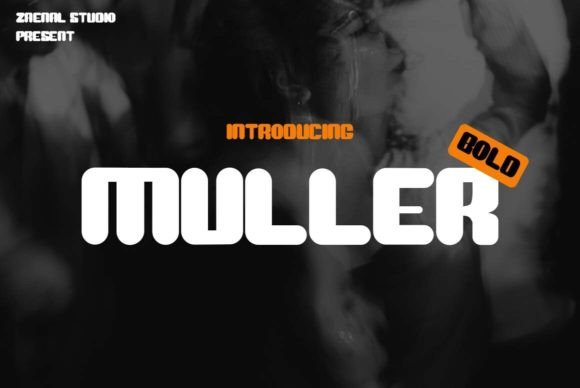
Muller is a clean, contemporary display font with subtle elegance—soft curves, balanced proportions, and just enough personality to feel warm without sacrificing polish. It’s not overly ornate or script-like, so it reads clearly at small sizes on product tags, yet it carries enough character to stand out in a crowded social feed or on a boutique window decal. Its modern sensibility makes it ideal for businesses rooted in celebration, care, and craftsmanship: wedding boutiques, artisan candle makers, indie beauty brands, mindful coaching practices, and even specialty cafés with curated aesthetics.
In real-world use, Muller shines where first impressions matter most. I use it for our logo lockup (paired with a light, neutral sans serif for body text), custom thank-you cards tucked into every order, and the delicate foil-stamped labels on our silk hair ties. On Instagram, I apply Muller to quote graphics and seasonal promo banners—it catches attention without competing with the product photo. For our website hero section and email headers, it adds visual hierarchy while reinforcing our brand voice: refined, sincere, and quietly confident.
It’s also surprisingly versatile on packaging. Because Muller maintains legibility even at 8–10pt, we confidently use it on tiny adhesive stickers for jewelry pouches and on folded hang tags for bridal robes. Unlike some decorative fonts that blur or lose shape when scaled down or printed on textured paper, Muller holds its form—whether laser-printed on kraft stock or digitally rendered for Pinterest pins. That reliability means less time tweaking kerning in Canva and more time focusing on what actually moves your business forward.
Consistency builds recognition—and recognition builds trust. When customers see Muller on our website banner, then again on their receipt, then again on the sticker sealing their package, they subconsciously register cohesion. That tells them we pay attention to detail, honor our craft, and respect their experience. For service-based entrepreneurs—like a wedding planner or wellness coach—using Muller in proposal decks, client onboarding PDFs, and workshop handouts signals professionalism without cold formality.
That said, Muller works best as a display font, not a workhorse. Think headlines, logos, signage, and short-form emphasis—not long paragraphs or ingredient lists. For those, I pair it with a clean, highly readable sans serif (like Inter or Montserrat) or a gentle serif (such as Lora or Playfair Display) depending on the mood I want to evoke. The contrast gives structure: Muller sets the tone; the supporting font delivers clarity. If you’re designing a café menu, try Muller for section headers (“Seasonal Pastries,” “House Brews”) and a friendly sans for item descriptions. For a candle brand, use Muller on the front label (“Amber & Vetiver”) and a minimalist sans for burn instructions on the back.
Before committing Muller across your entire brand system, test it in context. Drop it into your actual Canva template, print a sample tag at home, or preview it on your phone’s lock screen as a mock social post. Does it still feel aligned with your values? Does it read easily under natural light or on a dimmed device? Does it complement your photography style and color palette—or clash with them? Small adjustments here save rebranding time later.
Licensing matters, too. Muller is a premium font designed for commercial use—but always verify the license covers your specific needs. If you sell physical products with Muller in the design (like mugs, tote bags, or printed stationery), confirm the license permits embedding or reproduction. Same goes for digital templates you sell on Etsy or client deliverables you design as a freelancer. Reputable font vendors make this clear, and using Muller ethically protects both your business and the designers who created it.
Real examples help ground the choice: A handmade soap maker uses Muller on her lavender-scented bar labels—soft but distinct against matte white packaging. A micro-wedding planner applies it to her digital proposal cover, instantly signaling sophistication before the first line of copy. A ceramicist stamps Muller onto her studio logo on clay coasters, adding quiet authority to each piece. None of these businesses hired a full-time designer—but each used Muller to project intentionality, and that perception opens doors.
You don’t need a big budget or a design degree to build a memorable brand. You do need tools that work hard for you—fonts that support your message instead of distracting from it. Muller does exactly that: it’s expressive enough to reflect your uniqueness, restrained enough to stay legible, and modern enough to feel current without chasing trends. When your typography feels like an extension of your values—not an afterthought—you stop blending in and start standing out, one beautifully labeled package, one thoughtfully designed flyer, one scroll-stopping Instagram story at a time.
If your current font choices feel generic, inconsistent, or mismatched with your audience’s expectations, Muller offers a simple, high-impact upgrade. It won’t replace great photography or thoughtful copy—but paired with those, it completes the picture of a brand that knows who it is and shows up with care, everywhere it appears.